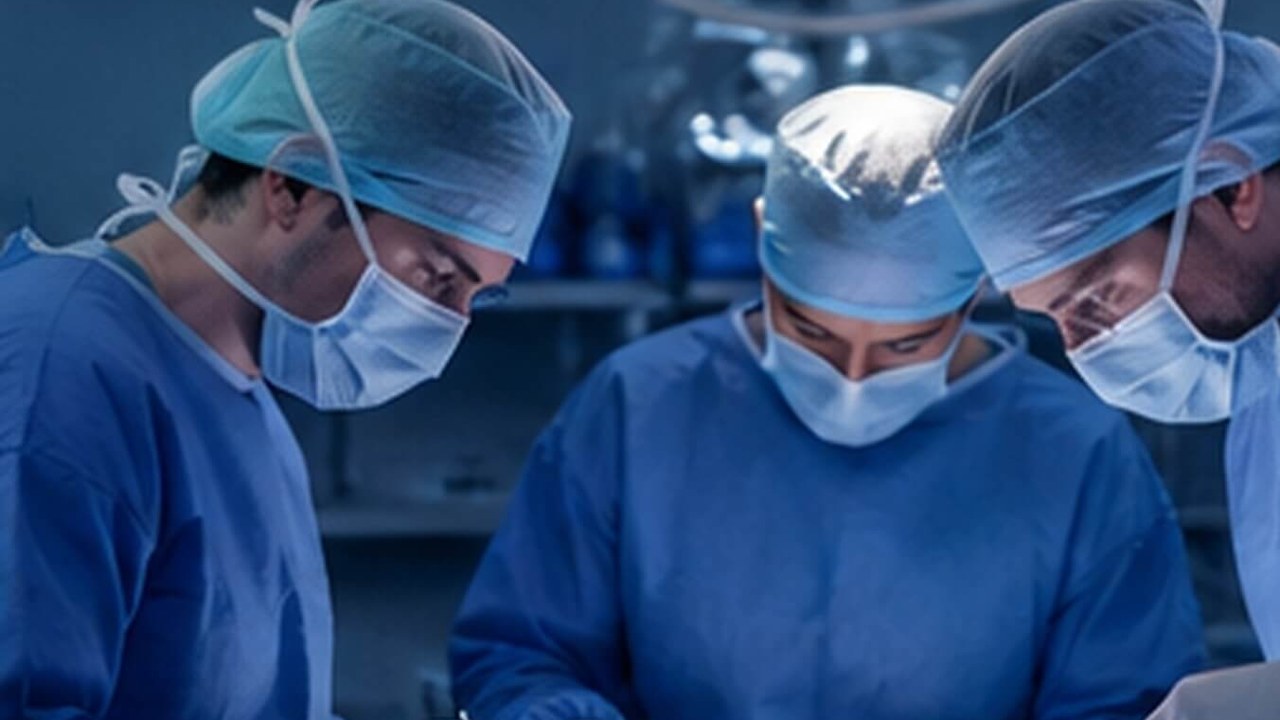
Committee Profile
The APMA Neurosurgery Committee provides an academic forum for physicians, researchers, educators, public health professionals, and institutions engaged in neurosurgery and operative neuroscience. Its work may support scientific discussion, evidence-informed educational resources, research communication, and policy-relevant understanding of brain tumors, spinal surgery, and neurotrauma. The Committee is academic and advisory in nature, with clear boundaries from certification, accreditation, regulatory approval, clinical endorsement, and individualized medical advice. Its work supports responsible academic exchange across clinical practice, research, education, public health, and health systems.
Full Introduction
The APMA Neurosurgery Committee serves as an academic forum for disciplined discussion of neurosurgery and operative neuroscience. The field is important to medical science and public health because it shapes how clinicians, researchers, educators, and health institutions understand brain tumors, spinal surgery, neurotrauma, and vascular neurosurgery. In many countries, the relevant disease patterns, service models, research priorities, and patient education needs differ substantially. A committee with a clear academic remit can help APMA consider these issues in an internationally credible, clinically careful, and institutionally restrained manner.
Within APMA, the Committee supports evidence-informed dialogue, professional learning, research communication, and policy-relevant understanding related to Neurosurgery. Its role is not to operate as a clinical authority or service provider, but to provide a structured setting in which expert perspectives may be organized for educational and scientific purposes. The Committee may help identify terminology, emerging evidence, methodological concerns, safety questions, and public health implications that deserve thoughtful attention. It may also help connect Neurosurgery with adjacent fields such as Neurology, Radiology, and Critical Care, where overlapping questions require careful interdisciplinary discussion.
The Committee's scope includes the academic review of functional neurosurgery, pediatric neurosurgery, perioperative neuroimaging, and surgical risk, together with broader questions of operative judgment, procedural safety, perioperative science, anatomical expertise, outcomes, and multidisciplinary surgical care. It may consider prevention, diagnosis, treatment principles, care pathways, health literacy, ethical issues, and the interpretation of research evidence. Its academic programme may include selected evidence reviews, educational priorities, interdisciplinary dialogue, and research communication developed through APMA's institutional processes. The Committee should avoid implying that general academic discussion is the same as a clinical guideline, regulatory decision, product evaluation, or patient-specific recommendation.
The Committee also has relevance to public health education. Public understanding of neurocritical care and rehabilitation interfaces can influence prevention, early recognition, treatment adherence, care navigation, and trust in medical institutions. By supporting clear, balanced, and evidence-informed content, the Committee may help APMA communicate medical knowledge without exaggeration or commercial influence. This is especially important where misinformation, unequal access to care, variable professional resources, or rapidly changing technology can affect clinical expectations and population outcomes.
For the APMA Science and Policy platform, the Neurosurgery Committee may contribute academic insight into the scientific, ethical, educational, and systems-level dimensions of neurosurgery and operative neuroscience. Its work may inform policy-relevant discussion by clarifying evidence, uncertainty, patient safety considerations, workforce implications, and equity concerns. The Committee should therefore emphasize clarity, proportionality, and respect for international variation in evidence, resources, and practice settings. The Committee's role is academic and advisory in nature. It does not certify professionals, accredit programs, license institutions, approve treatments, endorse products, rank organizations, or provide individualized medical advice. Its value lies in careful expert dialogue that strengthens APMA's broader mission to advance medical science, clinical excellence, public health education, ethical professional practice, and global health cooperation.
Academic Purpose
The Neurosurgery Committee exists to give APMA a structured expert forum for academic consideration of neurosurgery and operative neuroscience. Its purpose is to encourage disciplined exchange on brain tumors, spinal surgery, neurotrauma, and vascular neurosurgery, while connecting clinical science with education, research communication, public health understanding, and policy-relevant interpretation. The Committee may help identify educational priorities, clarify terminology, examine selected evidence, and relate emerging developments to ethical, equity, safety, and systems-level questions. The Committee advances thoughtful, interdisciplinary contribution through APMA's independent, public-purpose academic mission. Its work is guided by scientific integrity, ethical responsibility, international relevance, and appropriate subject-matter expertise.
Scope and Remit
- Maintain an academic forum for neurosurgery and operative neuroscience.
- Support discussion of brain tumors, spinal surgery, and neurotrauma.
- Consider implications for clinical practice, research communication, professional education, and public health education.
- Encourage interdisciplinary exchange with related APMA Specialty Committees where topics overlap.
- Recognize international variation in clinical pathways, resources, terminology, and health system capacity.
- Contribute to policy-relevant understanding without issuing regulatory decisions or clinical approvals.
- Identify ethical, equity, quality, and safety considerations relevant to Neurosurgery.
Core Focus Areas
- Brain tumors
- Spinal surgery
- Neurotrauma
- Vascular neurosurgery
- Functional neurosurgery
- Pediatric neurosurgery
- Perioperative neuroimaging
- Surgical risk
- Neurocritical care
- Rehabilitation interfaces
Professional Audience
The Neurosurgery Committee is intended for surgeons, procedural specialists, perioperative physicians, dental and oral health professionals where relevant, researchers, educators, quality leaders, and institutions involved in surgical care. Participation may be relevant to professionals who contribute to clinical practice, research, teaching, health communication, quality improvement, or policy-relevant analysis in areas connected to neurosurgery and operative neuroscience. The Committee may also be useful for individuals working at the interface of Neurology, Radiology, and Critical Care, where shared evidence and terminology require careful interpretation. Its audience is international and multidisciplinary, but its function remains academic. Engagement with the Committee should not be represented as a professional credential, institutional approval, clinical appointment, or evidence of regulatory recognition. The Committee may support inclusive exchange across regions, disciplines, and institutional settings.
Academic Functions
- Supporting scientific dialogue on neurosurgery and operative neuroscience.
- Advising on educational priorities where institutional review identifies a clear need.
- Contributing to evidence-informed resources in a selective and proportionate manner.
- Reviewing selected materials when appropriate and subject to APMA process.
- Supporting research communication and careful interpretation of emerging evidence.
- Informing policy-relevant discussion without issuing regulatory determinations.
- Strengthening professional standards through academic exchange and ethical reflection.
- Encouraging internationally aware discussion of quality, safety, equity, and public health relevance.
Public Health Relevance
The public health relevance of the Neurosurgery Committee lies in the relationship between neurosurgery and operative neuroscience and population wellbeing. Issues such as brain tumors, spinal surgery, neurotrauma, and vascular neurosurgery can influence disease burden, prevention opportunities, health literacy, care access, and patient outcomes. The Committee may help APMA frame educational materials that explain risks, uncertainties, prevention strategies, and care pathways in language suitable for a professional or public-facing audience. It may also support discussion of disparities, social determinants, environmental influences, and health system constraints where these factors affect the field. This public health role is educational and interpretive, not a substitute for medical care or public authority action. This framing can improve health literacy while preserving appropriate professional and institutional boundaries.
Science and Policy Relevance
For APMA's Science and Policy platform, the Neurosurgery Committee may provide academic insight into how evidence concerning neurosurgery and operative neuroscience should be understood by clinicians, educators, institutions, and policy stakeholders. It may contribute to discussion of functional neurosurgery, pediatric neurosurgery, perioperative neuroimaging, and surgical risk, including areas where scientific uncertainty, implementation barriers, cost, safety, equity, or ethical considerations require careful framing. The Committee may help distinguish established knowledge from emerging hypotheses and may identify questions that deserve further research communication. Its contribution is advisory and educational; it does not issue binding policy, regulatory approval, clinical authorization, or institutional endorsement. This support can help APMA present complex evidence in a careful, balanced, internationally relevant manner while preserving independence from commercial or regulatory decision-making.
Ethical and Institutional Boundaries
Keywords
Academic Standard
Committee activities are guided by APMA's principles of scientific integrity, professional independence, ethical responsibility, and public purpose.